Funny, we have never had a coyote show up at this property on our trail cams until this morning. We have seen more coyote scat, lately, with one scat on our deck outside the bedroom sliding door. We heard a howl when the volunteer firemen tested a siren not long ago. This morning, there was scat on our driveway. The cats will be staying in for awhile! The deer video shows again how they are curious about foreign objects.
Sunday, September 13, 2020

Friday, September 11, 2020
Nick Visits
Last Friday, Nick drove up from Napa to stay with us until Tuesday morning. We all had concerns about COVID, so Nick was tested 3 days before making the trip. Our intent to wear masks and distance the whole time proved unworkable, so eventually we gave up on that. The weather was great until Monday evening, so we were able to do all the favorite outdoor activities on our list. Nick, being somewhat of a foodie, meant we didn't skimp on kitchen fun and fine meals.
The visit took a turn Monday night with an unprecedented natural disaster.
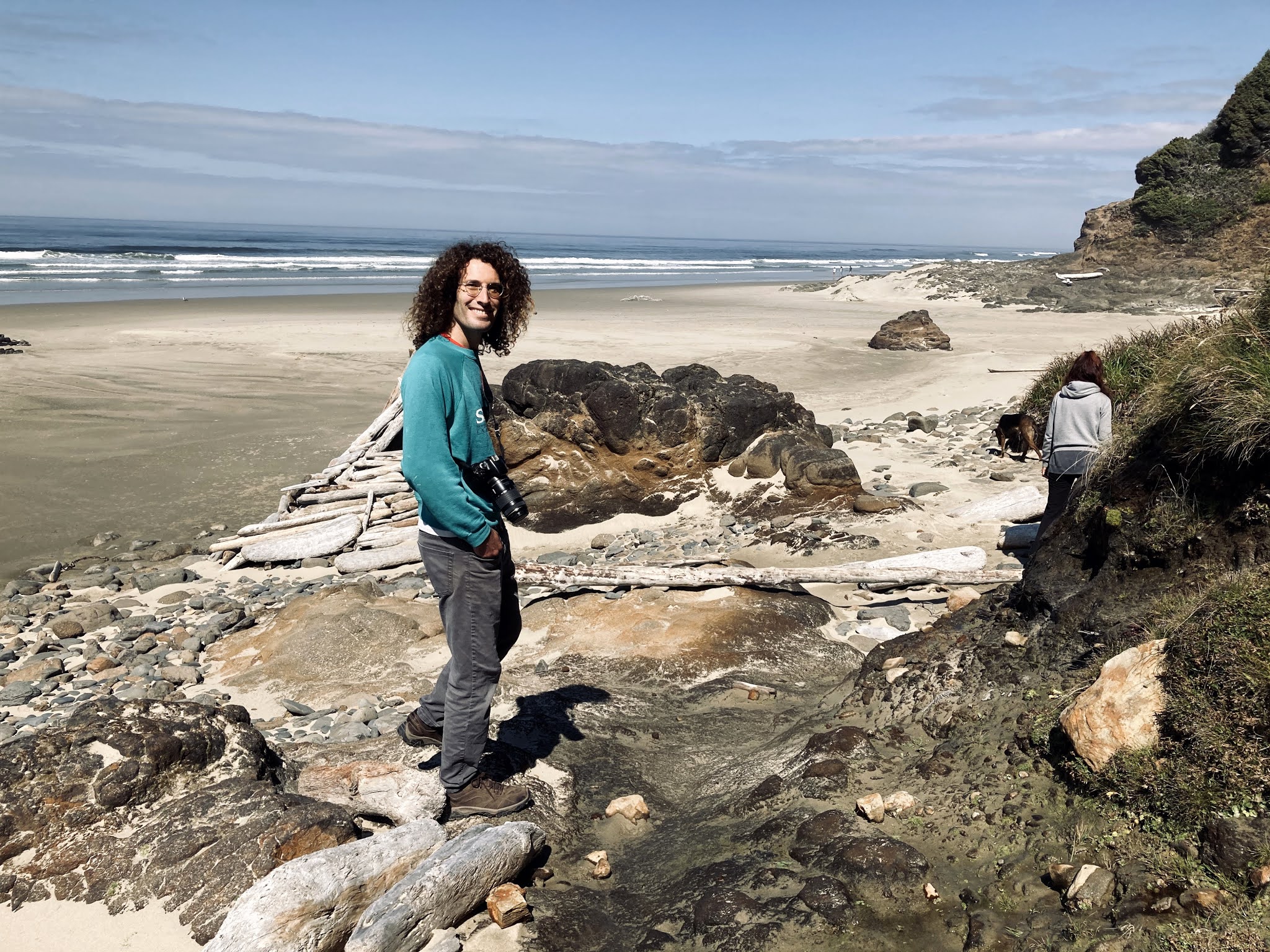
Saturday morning we headed south for a beach walk at Ocean Beach.


From the beach, we continued south to have an afternoon hike at Enchanted Valley.


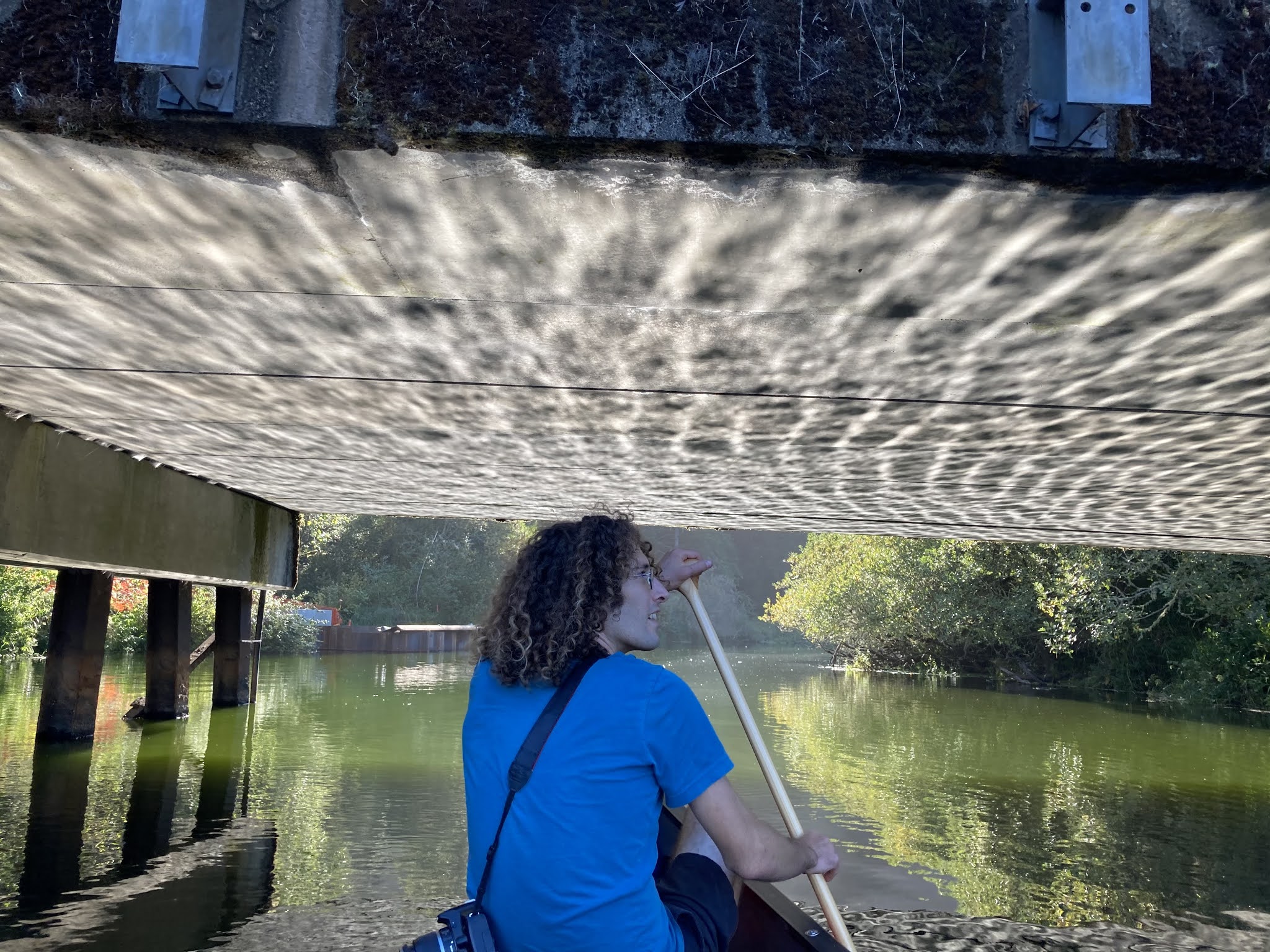
After breakfast on Sunday, we took a short hike on the trail across the road that we call Full Moon Trail, after Gail and I hiked up to its terminus on a full moon night.


Nick proves his manhood by performing total immersion. I did my annual immersion a couple weeks ago, so was good for the year. This water is colder than it looks!


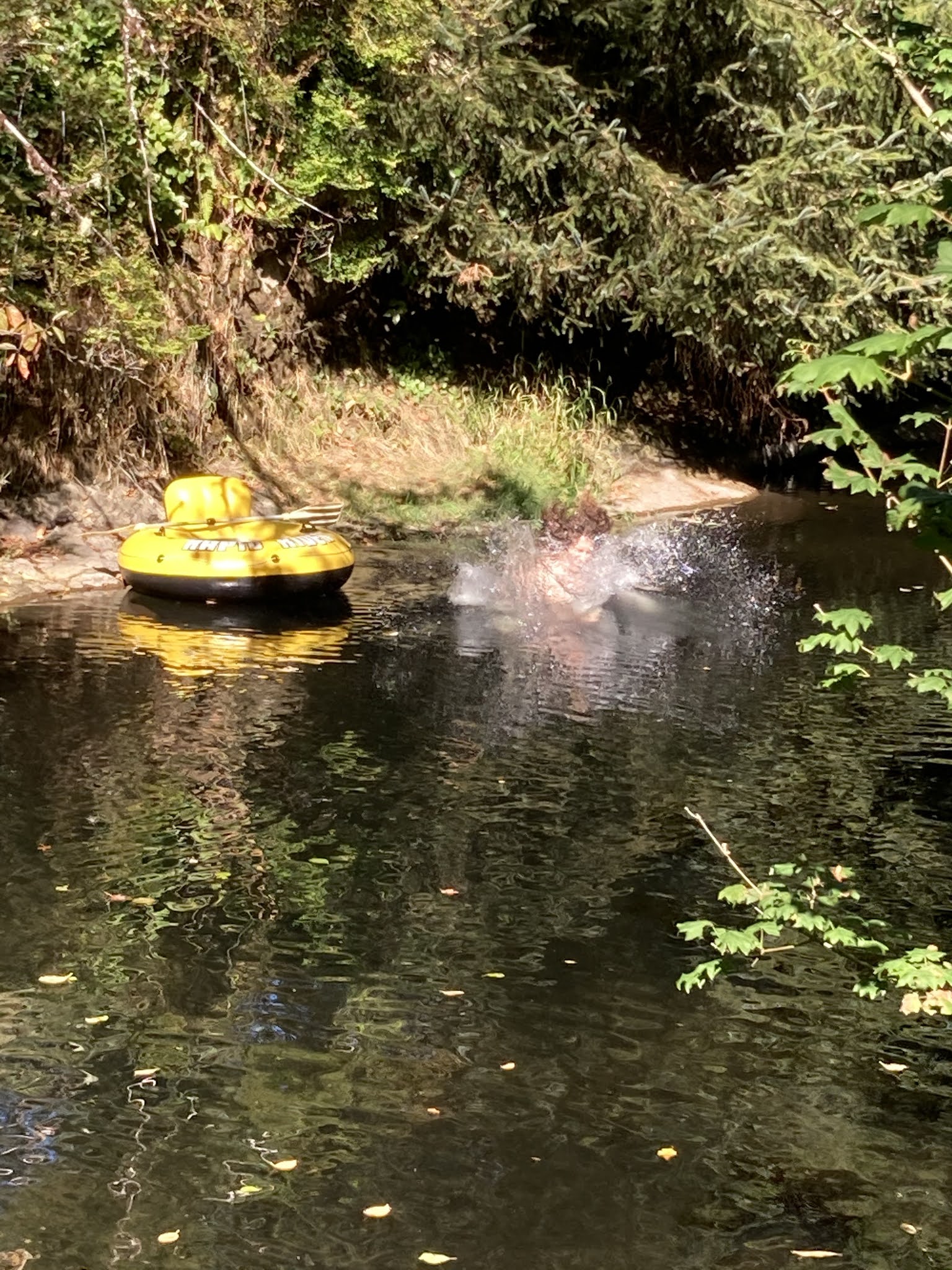


Sequence by Gail
Sunday evening, we had a chicken BBQ and a birthday party for Daisy who turned 28 in doggy years.



We started smelling wood smoke, and a warm east wind started gusting. The electricity went out around 8:00 PM which meant no water to the house.
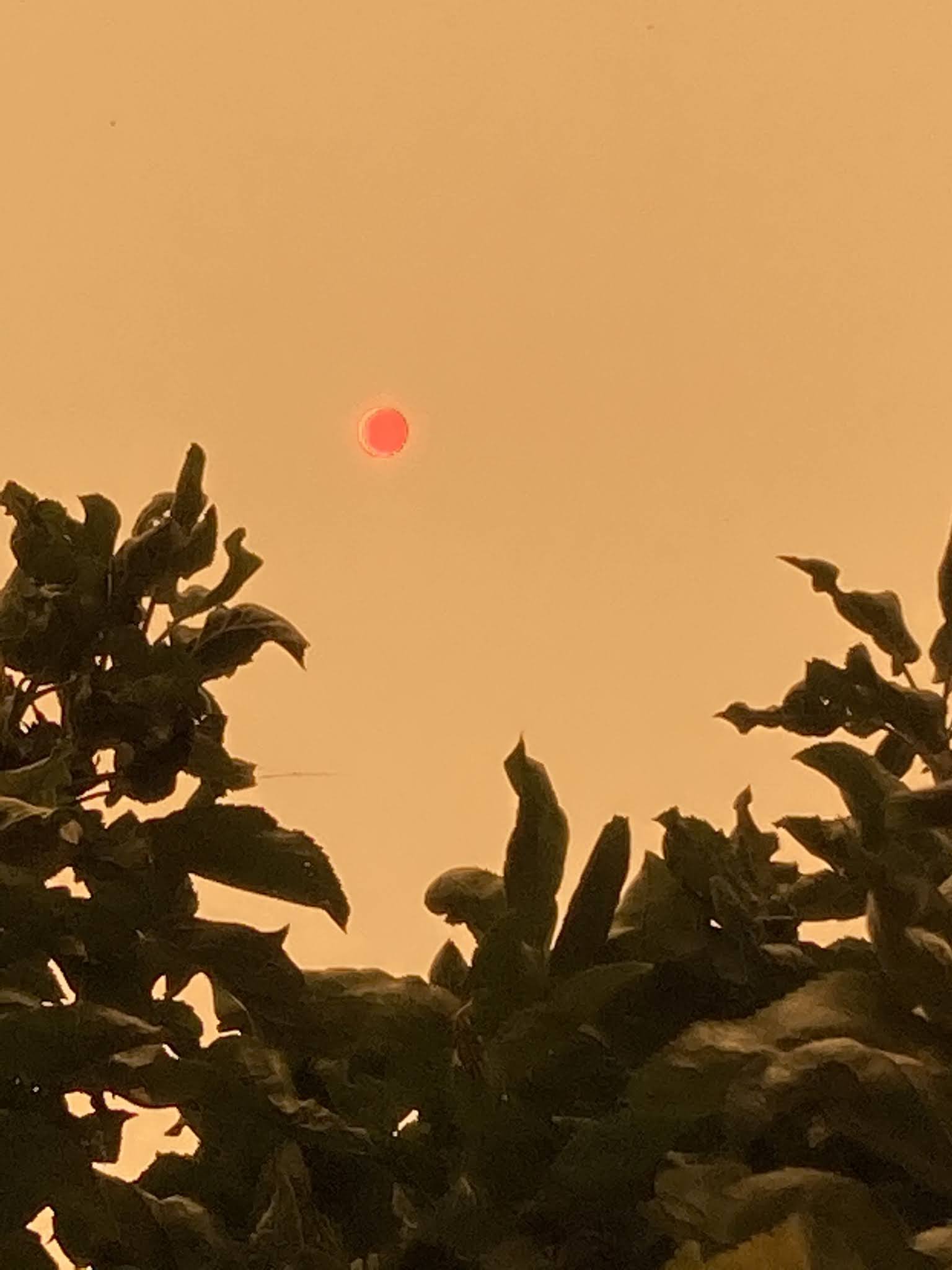
In the morning, Tuesday, the smoke was very thick, ash was falling, the sun was obscured, and there was an orange glow.
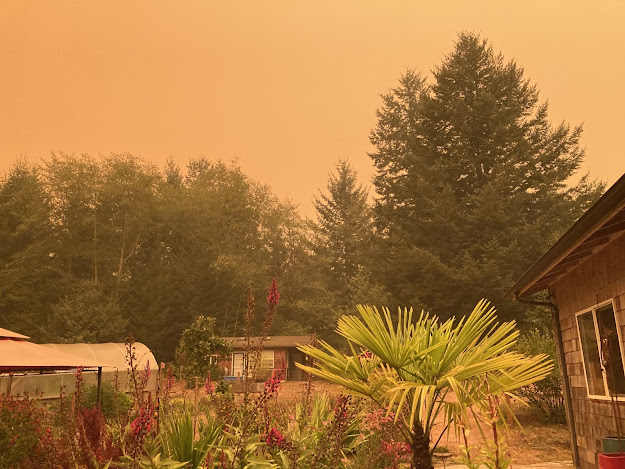
 When the sun was visible, it was a red ball. We said goodbye to Nick, and he headed back to Napa around 10:00 AM.
 I drove into Waldport to get more gas for the generator, and it was even smokier there.
 Seeing the smoke driving back up Yachats River Road.
 Our stashed emergency water, only 6 gallons, was getting low so we filtered some river water down at the river. As soon as we finished, around 5:00 PM, the power came back on.
 After wearing this mask outside for a couple days, it is now blackish on its surface. Gail started wearing a mask, also, while outside.
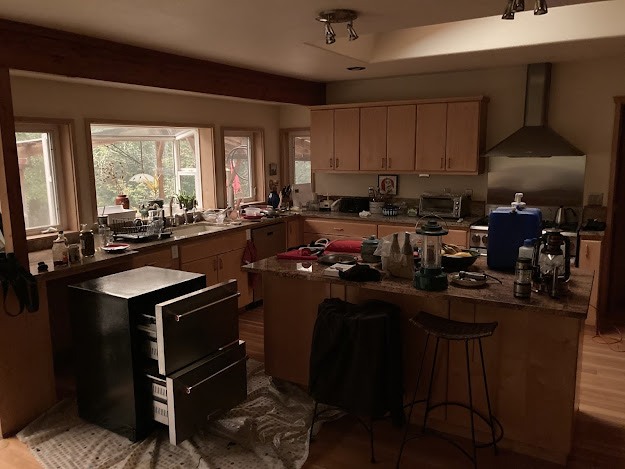 Disaster central. The little refrigerator on the left started defrosting after the power went out, resulting in puddles on the floor.

I hooked up the generator to the refrigerator, freezer, and computer. We can't hook it up to our water system, however.

We learned there were massive fires to our east in the Cascades, a fire outside Waldport, and a big fire about 40 miles north outside Lincoln City. The winds on the coast, similar to Santa Anas in Southern California, had gusted to 55 m.p.h. that night. I saw where 4 trees had come down on Yachats River Road and had been cleared. Some stores in Yachats had their storefront windows blown out.

Gail and I loaded up our cars with essentials, pet supplies, and favorite keepsake pictures, etc. We want to be ready for a quick escape if need be.


Nick's drive home turned into a near 17 hour marathon. It had taken him only 8 hours to drive up. As he approached Ashland, the I-5 was closed due to fire, and he had to reroute back to the coast. And then, because the 101 was closed near Willits, he had to stay on Highway One all the way down to Albion and then head back inland to the 101. He made it home safely, arriving at 2:30 AM.
Right now, Friday the 11th, the weather here is cool, no wind, and there is a chance of rain showers next week starting on Monday. I'm feeling fairly optimistic that we're going to be fine here. So many people in Oregon and other Western States have lost their homes, even loved ones, and have had their lives turned upside down.
What a year this has been. It was so fun to have Nick up, our only visitor in the last 6 months. I'm hoping that 2021 means we have a COVID vaccine and no virus, no Trump, no massive wildfires, and the ability to travel and see more family and friends. Give us the old normal!
River Song Provides
We have been eating mostly home grown produce this summer. The blueberries and strawberries were plentiful, and we had all the blackberries we wanted from "our" patch down the road. We had so many zucchinis and yellow squash, that I set up a free stand on the road several times. In addition we've had broccoli, carrots, beets, chard, peas, lettuce, basil, parsley, and our favorite beans so far, Helda beans. The tomatoes are just now ripening and coming in strong. I'm now in the process of doing some fall planting in the greenhouse.

Thursday, August 20, 2020
Knockin' Around With Gail and Bob


Those Crazy Arthropods With Funny Bods


You might remember the little white spider I recently posted. Well, this is another one. They are tiny, about an eighth of an inch long, and hide in flower heads where they ambush pollinators like butterflies and bumblebees.

It is the Goldenrod Crab Spider.

Friday, August 7, 2020
Doin' Our Yachats Thang
Here are a few photos and a video from the past week of observations and shenanigans.

Our guardian of Baboon Beach close up and personal. Gail gave him a trim this spring as he was hiding behind his bangs.

Gail found this little redwood burl slab down in Reedsport. I made the legs out of steel rod that I heated and bent, and then welded to brackets I made. Daisy, here, giving it the lick test. It will go between two chairs (whenever we find them) facing our river view.
This bobcat is crossing the river where there was a natural log bridge until the river took it out last winter. It looks to be fairly large to me!
 Trying to photograph water striders from 11 inches away is almost impossible. They are in perpetual motion!

I learned that they prey on other insects such as mosquito larvae, and have a sting that can leave a red spot and irritation. Usually they have wings, and can fly to other bodies of water if they have to. Their legs and bodies are covered in microscopic hairs that repel water that could weigh them down. Their middle two legs are used for rowing, and the back two for steering. They communicate by sending out vibrations through the water, which is often done to warn other striders to stay out of their territory.

Daisy and Gail take shelter on the beach near Rock Creek. How many creeks are named Rock Creek on the West Coast ? Also, Dry Creek and Big Creek. Who gets to choose such unoriginal names?


Our guardian of Baboon Beach close up and personal. Gail gave him a trim this spring as he was hiding behind his bangs.

Gail found this little redwood burl slab down in Reedsport. I made the legs out of steel rod that I heated and bent, and then welded to brackets I made. Daisy, here, giving it the lick test. It will go between two chairs (whenever we find them) facing our river view.


I learned that they prey on other insects such as mosquito larvae, and have a sting that can leave a red spot and irritation. Usually they have wings, and can fly to other bodies of water if they have to. Their legs and bodies are covered in microscopic hairs that repel water that could weigh them down. Their middle two legs are used for rowing, and the back two for steering. They communicate by sending out vibrations through the water, which is often done to warn other striders to stay out of their territory.

Daisy and Gail take shelter on the beach near Rock Creek. How many creeks are named Rock Creek on the West Coast ? Also, Dry Creek and Big Creek. Who gets to choose such unoriginal names?

The Fly
Subscribe to:
Posts (Atom)